A Fortune 100 financial services company had multiple forward-facing websites, each with its own design language, inconsistent patterns, and duplicate code. Designers across different lines of business were reinventing the wheel for every project. There was no shared system, no consistent process, and no way to ensure quality across teams.
The cost was real: slow delivery, inconsistent user experiences, duplicate development effort, and friction between designers, developers, and business partners. Without a shared foundation, every project started from scratch.
As Lead UX Designer, I was responsible for creating the design system, establishing the design process, mentoring the team, and mediating cross-functional conflicts. This was both a design challenge and a leadership challenge: getting 12 designers across multiple lines of business to adopt a shared system required equal parts persuasion and evidence.
Created a step-driven design process used for all forward-facing websites. This standardized how teams approached every project, from research to design reviews to final approvals. This included leading process improvements, research education, and team innovation sessions.
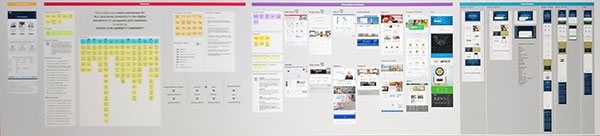
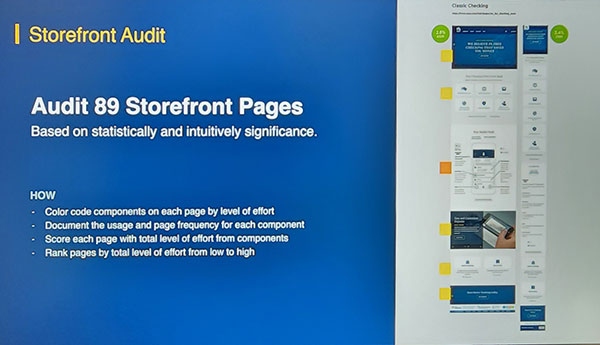
Started by auditing all existing components across every forward-facing web and mobile page, testing each for consistency and usability. Grouped similar components, reduced redundancy, and developed a unified design system with hundreds of components. The system gave designers a shared vocabulary and reusable building blocks instead of starting from scratch each time.
Built an HTML/CSS code component library that mirrored parts of the design system, reducing large amounts of development time by eliminating duplicate code development. Designers and developers could reference the same components in both style and code.
Mentored 12 UI/UX designers across multiple lines of business. Led design reviews, final approvals, and innovation sessions. Created a culture where designers learned from each other rather than working in silos.
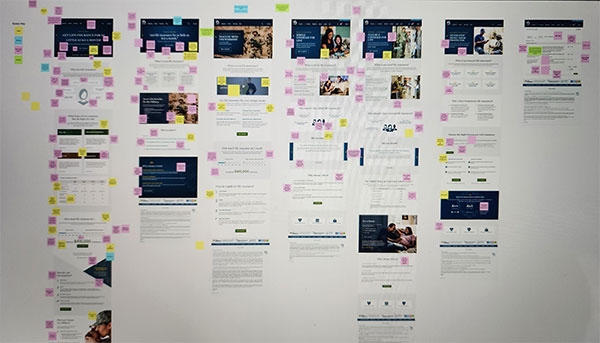
Mediated project conflicts between producers, designers, and business partners in an agile environment by creating exact roles and responsibilities. This increased collaboration while eliminating post-publish conflicts.
The central decision was whether to build a complete design system upfront or iterate organically. I chose a hybrid: establish the core architecture and process first, then let the component library grow organically as teams needed new pieces. This avoided the trap of over-building before adoption.
Building the companion HTML/CSS code library was a significant investment that blurred the line between design and development. The trade-off was maintenance burden vs. development speed. The payoff was clear: eliminating duplicate code development saved substantial time across dozens of projects.
"A design system isn't just components. It's a shared language. When 12 designers across multiple teams can reference the same building blocks, the organization moves faster and more coherently."
The design system became the foundation for all forward-facing websites at the company:
The step-driven process became the standard for all forward-facing work. By combining the design system, the code library, and the mentorship program, the team could deliver consistent, high-quality experiences faster, without the friction that comes from every team working differently.
