A Fortune 100 financial services company had a data organization producing reports and dashboards without design training, research, or quality standards. The result: inconsistent user experiences, redundant products, low adoption, and a constant cycle of post-production rework. Executives viewed data design as an afterthought rather than a strategic capability.
The challenge wasn't just making things look better. It was fundamentally changing how the organization thought about data design. That meant shifting culture, building capabilities, establishing processes, and proving value through measurable outcomes.
As Experience Design Advisor, I was responsible for transforming the data design approach across the organization. I trained data teams to become design teams, equipping BI analysts and data scientists with UX research skills, design principles, and quality standards. This wasn't a single project. It was a multi-year initiative spanning culture, process, training, and tooling. I led design consultations, reviews, and final approvals for all tasks before production, while also building the systems and programs that would sustain the transformation.
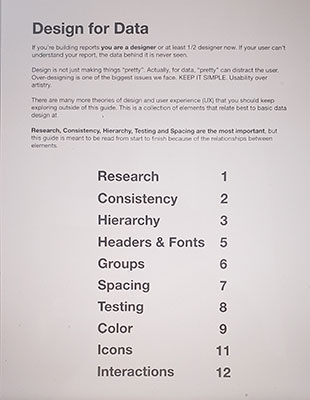
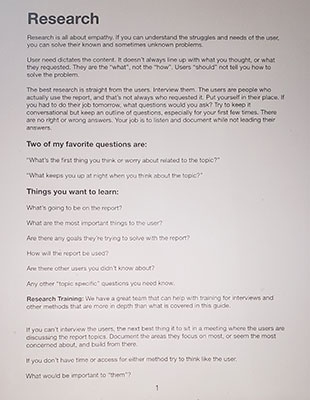
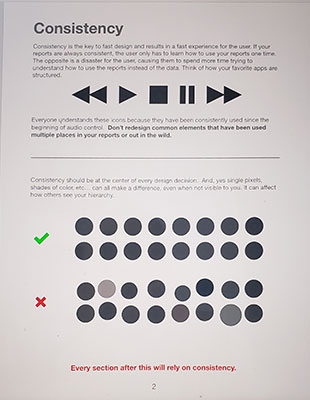
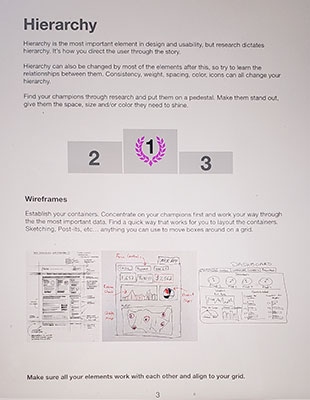
Developed a comprehensive training program for Business Intelligence Analysts and Data Scientists, teaching UX principles, research methods, and design best practices. This cut development time in half by helping teams get it right the first time.

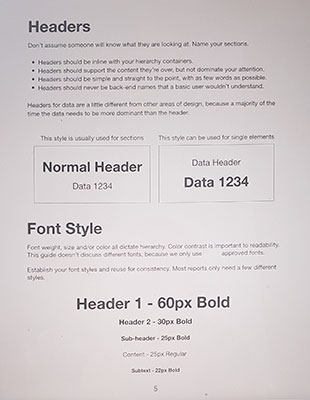
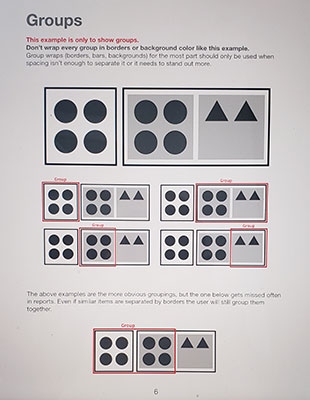
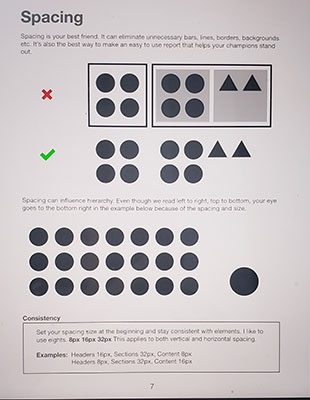
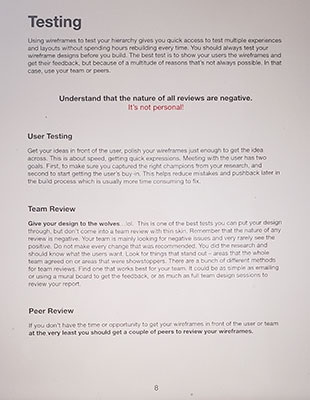
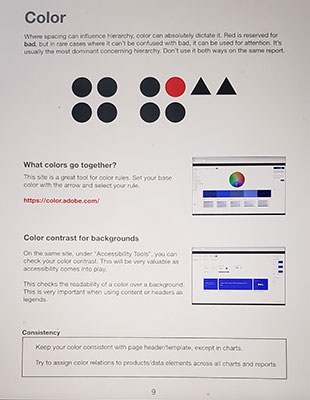
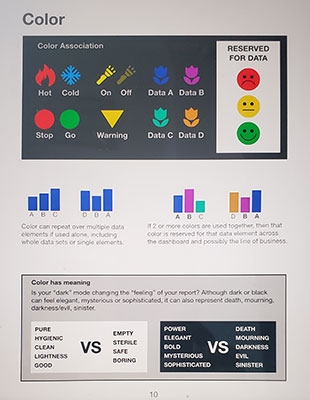
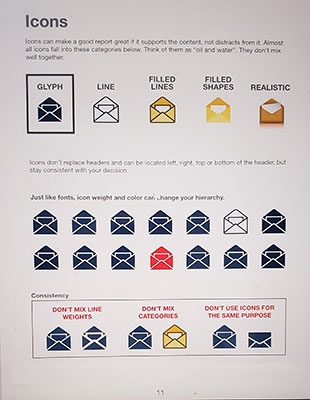
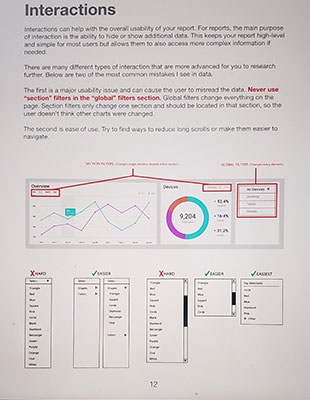
Created department-wide processes, a QA approval system, and task automation in Asana for all Data Analysts and Data Scientists. This ensured design quality and collaboration were built into the workflow, not bolted on after the fact.
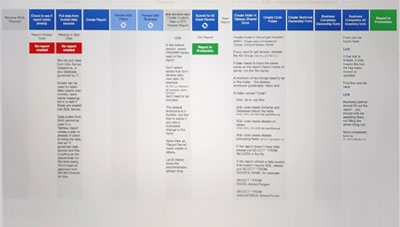
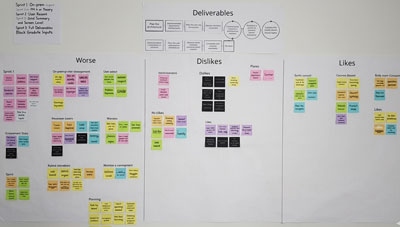
Implemented user interviews and affinity mapping to bridge the gap between executives and design teams. This reduced post-production changes by 90% by ensuring alignment before development began.
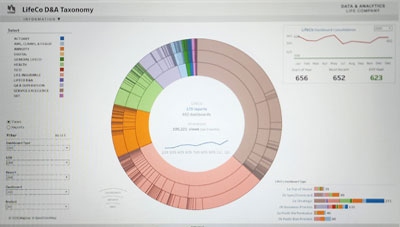
Redesigned the reporting catalog to enhance usability, creating a new hierarchy that allowed all employees to see what reporting was available, while capturing individual usage data. Resulted in a 23% reduction of redundant products (exceeding the 15% goal).
The biggest decision was whether to focus on individual report quality or systemic change. I chose systemic, investing in training, processes, and tools that would scale across the entire organization rather than fixing reports one at a time. This meant slower visible progress initially but compound returns over time.
Another key trade-off: standardization vs. flexibility. The QA approval system added a step to the workflow, which some resisted. But by automating routine tasks in Asana and Jira, the net effect was faster delivery with higher quality, not bureaucracy.
"The transformation changed how executives view data. What was once an afterthought became a strategic capability, and the numbers proved it."
Over six years, the transformation delivered measurable results across multiple dimensions:
The most lasting impact wasn't any single metric. It was the cultural shift. By building training programs, QA systems, and executive collaboration frameworks, the organization could sustain quality design independently. The investment compounded over time, with report usage climbing 200-1000% as teams applied what they learned.
Systemic change requires patience. The first year was about earning trust and demonstrating value through small wins. The training program was the turning point: once teams experienced the difference between designing with research vs. without, adoption became organic. The lesson: invest in capability, not just output.
